
Pet Telehealth vs. Emergency Veterinary Care: Knowing Which One Your Pet Needs
A Florida Pet Parent's Guide to Making the Right Decision During Hurricane Season
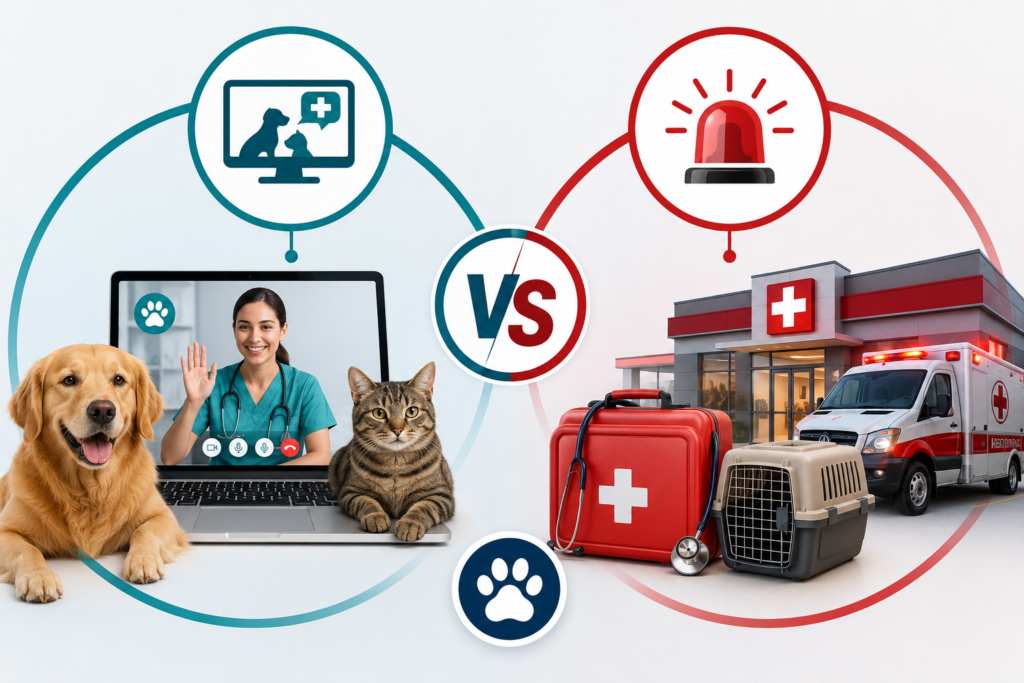
When your dog or cat suddenly becomes sick, injured, or behaves differently, one of the hardest questions to answer is: Should I speak with a veterinarian through telehealth, or does my pet need emergency veterinary care?
During Florida’s hurricane season, that decision can become even more difficult.
Flooded roads, dangerous driving conditions, power outages, clinic closures, and transportation problems may make veterinary care harder to access. At the same time, waiting too long when a pet is experiencing a genuine emergency can put their health at serious risk.
Pet telehealth can be extremely useful for appropriate non-emergency concerns, follow-up care, and veterinary guidance when traveling is difficult. However, it is not a replacement for emergency veterinary treatment.
Understanding the difference can help you respond quickly and confidently when your pet needs you most.
What Is Pet Telehealth?
Pet telehealth allows pet owners to communicate with veterinary professionals remotely using technology such as video consultations, telephone calls, or other approved communication methods.
Depending on the veterinary practice, telehealth may be useful for discussing concerns such as:
- Changes in appetite
- Mild digestive problems
- Behavioral changes
- Stress and anxiety
- Nutrition questions
- Medication questions
- Follow-up after a veterinary appointment
- Recovery monitoring
- General wellness concerns
- Hurricane-related concerns when the pet is otherwise stable
The veterinarian can ask questions, review available information, observe your pet when appropriate, and determine whether additional veterinary evaluation is necessary.
However, the veterinarian may still need to examine your pet physically before making a diagnosis or treatment decision.
What Is Emergency Veterinary Care?
Emergency veterinary care is designed for situations where a pet may have a serious illness, injury, poisoning, or other potentially life-threatening condition requiring prompt in-person assessment and treatment.
Emergency veterinary care may involve:
- Physical examination
- Diagnostic testing
- Bloodwork
- X-rays or other imaging
- Oxygen support
- Intravenous fluids
- Wound treatment
- Surgery
- Medication
- Hospital monitoring
These services generally cannot be replaced by a video or telephone consultation.
Pet Telehealth vs. Emergency Veterinary Care: The Key Difference
The simplest way to think about the distinction is:
Telehealth helps you determine what to do when your pet’s condition is appropriate for remote veterinary guidance. Emergency care is necessary when your pet needs immediate hands-on medical evaluation or treatment.
If you are uncertain, contacting a veterinary professional can help you determine the appropriate next step.
When Pet Telehealth May Be Appropriate
Telehealth may be useful when your pet is uncomfortable or behaving differently but does not appear to be experiencing a life-threatening emergency.
1. Mild Changes in Appetite
If your pet skips a meal but otherwise appears alert, comfortable, and hydrated, you may be able to discuss the situation with your veterinary team.
This can be particularly helpful after a stressful event such as a hurricane.
However, prolonged refusal to eat should not simply be dismissed as stress.
2. Mild Stress or Anxiety
Hurricanes can be frightening for pets.
Dogs and cats may:
- Hide
- Tremble
- Become clingy
- Vocalize more than usual
- Pace
- Sleep differently
- Temporarily lose interest in food
If your pet is otherwise stable, telehealth may provide an opportunity to discuss behavioral changes and appropriate supportive strategies with a veterinarian.
3. Nutrition Questions
Pet owners may have questions about:
- Changing diets
- Temporary food shortages
- Hydration
- Treats
- Weight management
- Prescription diets
- Feeding schedules
These are situations where veterinary guidance can help prevent well-intentioned feeding decisions from becoming nutritional problems.
4. Follow-Up Care
If your pet has already been examined by a veterinarian, telehealth may sometimes be useful for appropriate follow-up questions or monitoring.
Your veterinarian can determine whether a virtual consultation is sufficient or whether your pet needs to return for an in-person examination.
When Your Pet Needs Emergency Veterinary Care
Some symptoms should never be managed solely through telehealth.
Seek immediate veterinary attention if your pet experiences signs such as:
Difficulty Breathing
Breathing problems can become life-threatening quickly.
Warning signs may include:
- Severe or unusual breathing effort
- Blue, gray, or pale gums
- Excessive panting unrelated to normal activity
- Collapse
- Struggling to breathe
Severe Injury or Trauma
Hurricanes can expose pets to:
- Broken glass
- Fallen debris
- Sharp objects
- Collapsed structures
- Electrical hazards
- Vehicle accidents
- Flood-related injuries
Significant wounds, uncontrolled bleeding, suspected fractures, or severe trauma require prompt veterinary evaluation.
Poisoning or Toxic Exposure
During and after hurricanes, pets may encounter household chemicals, spoiled substances, medications, pesticides, plants, or contaminated materials.
If you suspect your pet has consumed something potentially toxic, contact a veterinarian or appropriate animal poison-control resource immediately rather than waiting for symptoms to appear.
Seizures, Collapse, or Loss of Consciousness
A seizure, collapse, or sudden loss of consciousness can indicate a serious medical problem.
These situations require urgent veterinary attention.
Repeated Vomiting or Severe Diarrhea
A single episode of vomiting or diarrhea may not always constitute an emergency.
However, repeated vomiting, severe diarrhea, blood in vomit or stool, weakness, or signs of dehydration can require urgent evaluation.
Inability to Urinate
Difficulty urinating can be especially dangerous in cats.
A cat repeatedly entering the litter box without producing urine may be experiencing a urinary obstruction, which can become life-threatening.
This is an emergency.
Hurricane Season Makes the Decision Even More Important
During a hurricane, pet owners may be tempted to delay veterinary care because traveling is inconvenient or dangerous.
That can be understandable.
But the weather should not cause you to ignore serious symptoms.
Instead, have a plan before the storm arrives.
Know:
- Your regular veterinarian
- Available telehealth options
- The location of an appropriate emergency veterinary facility
- How you will transport your pet
- Where your pet’s medical records are stored
- What medications your pet takes
- What warning signs require immediate attention
Preparing these details before hurricane season can reduce stress when something actually happens.
What Should You Do If You're Unsure?
Sometimes the situation isn’t obviously an emergency.
Your pet may be:
- Eating less
- Hiding
- Acting unusually quiet
- Vomiting once
- Experiencing mild diarrhea
- Appearing anxious
- Drinking more or less than usual
Rather than trying to diagnose the problem yourself, contact your veterinary team.
A veterinarian can ask targeted questions and determine whether remote guidance is appropriate or whether your pet should be examined in person.
When in doubt, don’t guess. Ask a veterinary professional.
How UrbanPawz Animal Clinic Can Help
For Florida pet owners, having an established veterinary relationship before hurricane season can make unexpected situations easier to manage.
UrbanPawz Animal Clinic provides veterinary support designed around the health and wellbeing of your companion animals.
Depending on your pet’s situation, veterinary support may include:
- Preventive wellness care
- Pet nutrition guidance
- Behavioral support
- Chronic condition management
- Follow-up care
- Appropriate pet telehealth consultations
- In-person veterinary evaluation when necessary
The goal isn’t to choose telehealth over emergency care.
The goal is to make sure you choose the right level of care for your pet’s situation.
Create a Hurricane Veterinary Care Plan Before the Storm
Don’t wait until a hurricane is approaching to figure out how you will access veterinary care.
Create a simple emergency plan that includes:
- Your veterinarian’s phone number
- Telehealth information
- Emergency veterinary contact information
- Your pet’s medical records
- Current medication list
- Vaccination records
- Recent photographs of your pet
- Pet carrier or leash
- Transportation plan
- Two weeks of essential medications and food where appropriate
If your pet has a chronic medical condition, ask your veterinarian about specific hurricane preparedness recommendations.
Frequently Asked Questions About Hurricane
No. Telehealth allows you to communicate with a veterinary professional remotely, while an in-person appointment allows the veterinarian to physically examine your pet and perform diagnostic tests or treatments when necessary.
For appropriate non-emergency concerns, telehealth may be particularly useful when severe weather makes travel difficult. Your veterinarian can help determine whether your pet's situation can be managed remotely or requires in-person care.
The veterinarian's ability to diagnose and treat a condition remotely depends on the circumstances, the technology available, the veterinary-client-patient relationship, and applicable veterinary regulations. Some conditions require an in-person examination and diagnostic testing.
Difficulty breathing, collapse, seizures, severe trauma, uncontrolled bleeding, suspected poisoning, inability to urinate, and other potentially life-threatening symptoms require urgent veterinary attention.
Not if your pet is experiencing a genuine emergency. Your safety matters too, so follow local emergency instructions and avoid driving through dangerous conditions. If possible, contact your veterinary team or an emergency veterinary facility for immediate guidance.
UrbanPawz Animal Clinic can help provide veterinary guidance for appropriate concerns and determine when an in-person evaluation may be necessary. Contact the clinic directly to understand which services are currently available and appropriate for your pet.
Don't Guess When Your Pet Needs Veterinary Care
Hurricane season can create uncertainty, but your pet's health shouldn't have to be another unknown.
Pet telehealth can be a valuable tool for appropriate non-emergency concerns, especially when severe weather makes travel difficult. But when your pet is experiencing a potentially life-threatening condition, emergency veterinary care should take priority.
The most important thing is knowing the difference and having a plan before the storm arrives.
🐾 Prepare Your Pet's Veterinary Care Plan With UrbanPawz Animal Clinic
Contact UrbanPawz Animal Clinic today to establish a veterinary care plan, discuss your pet's individual needs, and learn about appropriate telehealth options.
From routine wellness care and nutrition guidance to veterinary support during challenging situations, having a trusted veterinary team can give you greater confidence when your pet needs you most.

